Product Selection
Explore our Product Selection category for a curated range of top-quality products designed to meet your needs. Whether you're looking for the latest technology, stylish apparel, or innovative home solutions, our selection offers something for everyone. We pride ourselves on providing a diverse array of products that cater to various tastes and preferences, ensuring you find exactly what you're looking for. Browse through our carefully curated collections and discover new favorites today.
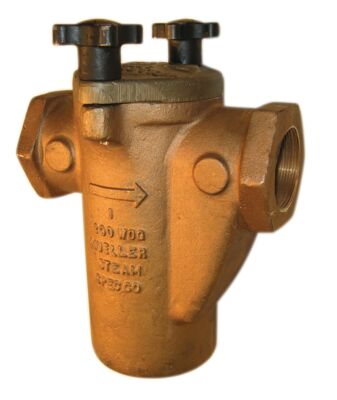
Wye strainers are commonly misordered, leading to costly errors and performance issues. This guide provides a comprehensive walkthrough of every decision needed to correctly specify a wye strainer for industrial systems. Learn how to choose the right pipe size, pressure rating, materials, screen type, and end connections to avoid rework and ensure optimal operation.
Stainless steel pipe excels in corrosive environments, hygiene-critical applications like food and pharma, and where a clean appearance is paramount. Though initially pricier, stainless steel often delivers better long-term value in harsh conditions by resisting rust and minimizing maintenance. Carbon steel remains economical for mild services, but understanding the application dictates the best choice.
Selecting the right pipe wall thickness is crucial for industrial piping design, balancing safety, compliance, and cost. This guide details the process, from defining design conditions and material selection to applying piping codes, accounting for temperature effects, corrosion, and joining methods. The goal is a safe, efficient, and cost-effective system, avoiding common overbuilding mistakes.
Choosing the right pipe material for steam service is crucial for safety and longevity. This guide breaks down common options like carbon steel (the industry standard), alloy steel for high temperatures, and stainless steel for corrosion resistance. Copper and cast iron have limited or no use in modern steam systems. Select wisely based on pressure, temperature, and application.
Navigating Schedule 40 versus Schedule 80 metal pipes? Schedule 80 boasts thicker walls for higher pressures and temperatures, though it's heavier and more expensive. Schedule 40 suits common industrial needs. Selecting the right schedule optimizes system safety, performance, and cost-effectiveness based on specific application requirements and codes.
Calcium silicate insulation is crucial for industrial piping, especially at pipe supports. It offers exceptional load-bearing strength, high temperature resistance (up to 1,200°F), and moisture resistance. Ideal for demanding environments, cal-sil prevents insulation crushing, maintains thermal performance, and ensures long-term system reliability, safety, and reduced maintenance in critical applications like refineries and power plants.
This post details pipe flange dimensional specifications, crucial for proper fit and safe operation. It covers key standards like ASME/ANSI, API, MSS, and international norms such as ISO, EN, DIN, BS, and JIS. Understanding these ensures compatibility and defines critical measurements, pressure ratings, and tolerances.
Ordering pipe flanges requires understanding both material and dimensional specifications. This guide outlines essential details like flange type, pipe size, pressure class, facing, and common material grades (e.g., ASTM A105, A182), ensuring you can confidently specify flanges for various industrial applications.
ASTM A350 specifies carbon and low-alloy steel forgings for low-temperature service, guaranteeing toughness and ductility in sub-zero environments. Essential for piping, pressure vessels, and fittings, grades like LF2 (common cold service) and LF5/LF9 (cryogenic applications) ensure reliable performance. Choosing the correct A350 grade is vital for safety.
ASTM A105 is a widely used carbon steel for forged piping components like flanges and fittings. Known for its versatility, strength, and cost-effectiveness, it's ideal for pressure systems in ambient and high-temperature service. Understanding its various sub-grades, such as A105N, ensures optimal material selection for diverse applications.
This post offers a comprehensive list of common ASTM A182 & ASME SA182 material grades, including brief descriptions, typical availability, and common uses for piping, flanges, fittings, and valves. Learn how to select the correct grade to meet your application's temperature, pressure, corrosion, and service-life demands.
Pressure Relief Valves (PRVs) and Safety Relief Valves (SRVs) are critical for overpressure protection. PRVs are designed for liquid service, opening gradually, while SRVs are for gas or vapor systems, providing rapid, full-capacity relief. Understanding these distinct functions is essential for selecting the correct valve to ensure system safety and compliance.