
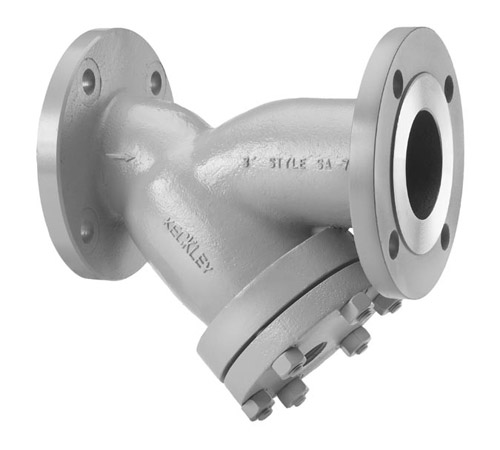
Wye strainers look simple, but they are among the most commonly misordered piping components in industrial systems. A missing detail can lead to the wrong materials, poor performance, or an expensive reorder once the strainer is already on site, or worse, installed.
This guide walks you through every decision you need to make when ordering a pipe wye strainer and explains why each matters.
1. Start With the Pipe Size
Wye strainers are specified by nominal pipe size (NPS), not the outside diameter.
Examples:
- 2" Wye Strainer
- 6" Wye Strainer
- 12" Wye Strainer
Key reminders:
- Strainers are typically the same size as the line, but not always. Flow requirements are an important factor in determining the size of the strainer.
2. Pressure Rating & Design Standard
Don’t assume pressure class equals pressure rating.
You should specify:
- Pressure class (e.g., Class 150 WSP or 600 CWP)
- WSP (working steam pressure) and CWP (cold working pressure) often result in different pressure classes being specified.
It is helpful to provide:
- Normal operating pressure
- Maximum design pressure
This ensures:
- Proper wall thickness
- Correct bolting
- Safe operating limits
3. Temperature Range
High and Low temperatures affect:
- Body material selection
- Pressure Rating
- Gasket compatibility
- Screen strength
It is helpful to provide:
- Normal operating temperature
- Maximum design temperature
This is especially critical for:
- Steam
- Hot oil
- Sub Zero applications
- Chemical services
4. Specify the Body Material
The body material must be compatible with pressure, temperature, media, and connection type.
Common Body Materials
- Cast Iron – HVAC, water, low pressure
- Carbon Steel (WCB) – Steam, oil, process fluids
- Stainless Steel (CF8 / CF8M) – Corrosive or sanitary service
- Bronze – Seawater, marine applications
- Brass & Lead Free Brass - Water and Potable Water
- Alloy Steel – High temperature, corrosive, or specialty services
Tip: Specify the ASTM casting grade, not just “carbon steel” or “stainless.” (e.g., ASTM A216 WCB)
5. Choose the End Connection Type
This is one of the most common ordering errors.
Common End Connections
- Threaded (NPT) – Small sizes, low pressure, maintenance access
- Socket Weld (SW) – High-pressure small-bore systems
- Butt Weld (BW) – High pressure, high temperature, permanent installs
- Flanged – Most common for industrial service and maintenance access
Butt Weld and Flanged Details You Must Specify
If Butt Weld, you must specify the pipe schedule or bore size
If Flanged, you must specify:
- Flange standard (ASME B16.5, B16.47)
- Pressure class (150, 300, 600, etc.)
- Raised Face (RF) or Ring Type Joint (RTJ)
Example:
4" Wye Strainer, Flanged, ASME B16.5, Class 150, RF
6. Define the Screen Material and Perforation and/or Mesh
The strainer screen is the functional heart of the wye strainer.
Screen Material Options
- Stainless Steel (304 is the most common; other grades are also made)
- Alloys (Monel, Hastelloy, etc)
- Brass and Aluminum (not very common)
- Carbon Steel (typically for temporary strainers only)
Screen Perforation vs Mesh
You must specify one or both:
- Perforated Plate
-
- Expressed in hole diameter (e.g., 1/16", 1/8")
- Stronger, less prone to collapse
- Wire Mesh (Wire Cloth)
-
- Expressed in mesh size (e.g., 20 mesh, 40 mesh)
- Finer filtration, higher pressure drop
- Mesh screens sometimes need perforated screens for structural support. Here you should specify both.
Rule of thumb:
- Coarse debris → perforated plate
- Fine particulate → mesh screen
- Consider flow requirements
7. Orientation and Installation Considerations
Wye strainers are directional.
Key installation questions:
- Horizontal or vertical installation?
- Is the flow direction clearly marked?
- Is there clearance to remove the screen?
If space is limited, confirm:
- Screen removal clearance
- Blow-off port orientation
8. Blow-Off Connection
Many wye strainers include a blow-off or drain connection for cleaning.
These are typically part of the manufacturer's standard design. Options need to be specified.
When required, you should specify
- Blow Off size
- Connection type, FNPT, Socket weld, etc
- With or without a plug
- With or without a shut-off/drain valve
9. Codes, Approvals, and Special Requirements
Depending on the application, you may need:
- Applicable design standard:
-
- ASME B16.34
- MSS SP-114
- Manufacturer standard
- NSF 61 (potable water)
- NACE MR0175 (sour service)
- CRN (Canada)
- PED (Europe)
If you don’t specify this up front, you may not get them.
10. How to Write a Complete Wye Strainer Order Description
Here’s an example of a correct, complete ordering description:
6" Wye Strainer, Flanged Ends, ASME B16.5 Class 150 RF,
ASTM A216 WCB Body, 304 Stainless Steel Perforated Screen with 1/8" Holes,
¾" NPT Blow-Off with Plug, Flow Direction Arrow,
Design per ASME B16.34, Service: Steam at 150 PSI, 400°F
Final Checklist Before You Order
✔ Nominal pipe size
✔ End connection & pressure class
✔ Body material
✔ Screen material and opening size
✔ Pressure & temperature
✔ Blow-off connection
✔ Codes or approvals
✔ End connection & pressure class
✔ Body material
✔ Screen material and opening size
✔ Pressure & temperature
✔ Blow-off connection
✔ Codes or approvals
Closing Thought
A wye strainer is cheap compared to the cost of downtime, damaged equipment, or rework. Taking time to order it correctly can save time and costs in the long run.
Jan 30, 2026
