0 $0.00
items in your cartto quote Checkout
Ooops no items were found.
Try something else.
Ok
Loading…

CTS Flanges: History, Design, Types and Benefits

6 min
When copper tube must connect to flanged valves, pumps, boilers, chillers, backflow preventers, or other equipment, the connection can be difficult. Traditional bronze or brass companion flanges require careful alignment, take extra time to install, and may need separate dielectric protection to prevent galvanic corrosion.
CTS Flange simplifies that connection.
 
With more than 50 years of experience supplying flange products, CTS Flange has built its reputation on a straightforward idea: make the copper-to-steel flanged connection faster, easier and better protected against electrolysis. The company was established in Melbourne, Australia, and today supplies products throughout Australia, the United States and Canada.

How the CTS Flange Design Works

A conventional copper flange connection can require the installer to hold the flange in the correct orientation while making the soldered or brazed connection. If the bolt holes are not correctly positioned, the finished assembly may be difficult to connect to the equipment.
CTS eliminates much of that problem through its floating-flange design.
 
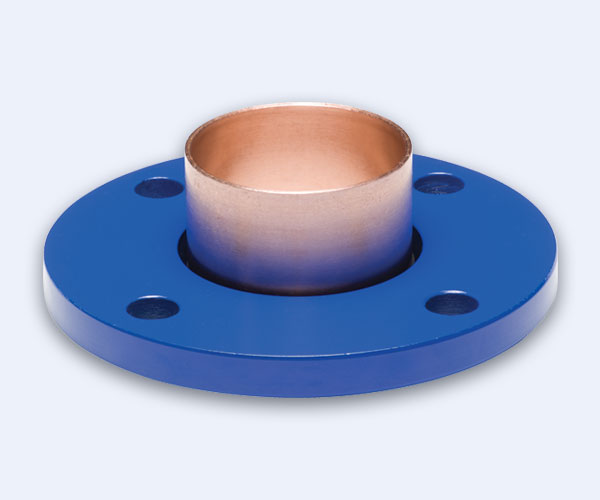
The copper connection is attached to the tube first. The steel backing flange remains free to rotate around the completed joint. The integrated insulating component also helps center the flange and provides the electrical isolation required between the copper piping and steel or iron equipment.
 
This seemingly simple design provides several installation advantages:
  • Bolt-hole alignment can be completed after the tube connection is made.
  • The flange can rotate to match fixed equipment.
  • Installation does not require forcing the piping into alignment.
  • Separate dielectric insulation kits may not be required.
  • Heating and cooling time can be reduced.
  • The connection is less susceptible to cracking or warping caused by overheating or rapid cooling.
CTS reports that the brazing time required for its Copper Companion Flange can be up to 20% less than the time required to attach a bronze flange.

CTS Flange Product Types

CTS has expanded the original concept into a range of flange products designed for different piping applications, including insulated copper flanges, copper-coated flanges, roll-grooved flanges, copper press-fit flange adapters, and black steel flanges.

EPDM Insulated Copper Flanges

The traditional CTS insulated flange uses an EPDM insulating component between the copper connection and steel backing flange. The system provides electrical isolation between dissimilar metals while retaining the flexibility of a floating flange.
These flanges are available for common 125/150-lb and 300-lb applications, depending on the product configuration.

Copper-Coated Flanges

CTS also offers a copper-coated flange design. Instead of relying on the separate insulating arrangement used with the traditional design, the copper-coated flange incorporates a copper coating intended to provide electrolysis protection.
 
CTS describes this as its next-generation flange technology and states that the copper-coated design does not require an EPDM insulator.

Roll-Grooved Flanges

CTS manufactures flanges for roll-grooved copper tube applications. This provides an alternative for mechanical piping systems where grooved joining technology is preferred over soldering or brazing.
Roll-grooved systems can be particularly useful where installation speed, accessibility and reduced hot work are important considerations.

Copper Press-Fit Flanges

CTS also offers copper press-fit flange adapters, formerly identified as spigot-style products. These products allow the flange connection to be incorporated into press-fit copper piping systems, providing another installation option for contractors working with modern mechanical joining methods.

Black Steel Flanges

The CTS product range also includes black steel flanges, providing conventional steel flange components for applications that don't require a copper-to-steel transition.

The Benefits Go Beyond Installation Speed

The biggest advantage of CTS Flange isn't just that it saves installation time. The design addresses several common problems simultaneously.

1. Electrolysis Protection

Electrolysis protection is central to the CTS design.
 
CTS states that its flange systems provide 100% electrolysis protection when properly installed, helping protect copper-to-steel and copper-to-cast connections. An appropriate isolating gasket should still be used where required by the application.
 
Independent Intertek testing commissioned by CTS also evaluated copper/steel assemblies with and without the electrolysis insulator. CTS test results showed substantially greater dielectric performance for the insulated assembly.

2. Faster Installation

Every minute saved on a commercial or industrial piping project can add up quickly.
 
CTS reports that its Copper Companion Flange can reduce brazing time by up to 20% compared with attaching a bronze flange. The ability to rotate the flange after completing the copper connection also eliminates the time normally spent carefully positioning bolt holes during brazing or soldering.

3. Easier Alignment

This may be the most appreciated feature for installers.
 
The flange can rotate after the copper connection is completed. That means the installer does not have to predict the final bolt-hole orientation while making the joint perfectly. This is particularly useful around pumps, valves, chillers and other equipment where access may be limited.

4. Reduced Hot-Work Concerns

CTS states that its design can reduce heating and cooling time and helps prevent cracking or warping caused by overheating or cooling too rapidly.
That can translate into a more repeatable installation process and less time spent waiting for components to cool before completing the assembly.

5. No Separate Dielectric Insulation Kit

Traditional copper-to-steel flange connections can require additional insulating components.
 
CTS integrates electrical isolation into its flange design, potentially eliminating the need for separate bolt insulation kits. This simplifies material procurement and installation while reducing the number of components that can be lost or incorrectly installed.

6. Lead-Free Construction

CTS states that its copper component is 99.9% copper and that its products are lead-free. The company's current product literature identifies certification to NSF/ANSI/CAN 61 and 372.
 
That makes the product particularly relevant to commercial plumbing, potable water and institutional projects where material compliance is an important part of the specification.

Where CTS Flanges Are Used

CTS Flanges are designed for a wide range of commercial, institutional and industrial piping applications.
Typical applications include:
  • HVAC and hydronic systems
  • Chillers and cooling systems
  • Boilers and heating systems
  • Pumps
  • Butterfly and flanged gate valves
  • Backflow prevention equipment
  • Fire and emergency systems
  • Water supply connections
  • Industrial mechanical piping
  • Packaged pump and boiler skids
  • New construction and retrofit projects
CTS reports installations at hospitals, data centers, universities, manufacturing facilities, stadiums and other major commercial and institutional projects.
The company also cites projects involving facilities such as Levi's Stadium, UC Davis Medical Center, Kaiser hospitals, Microsoft data centers and the Nissan manufacturing plant. 

Why CTS Flanges Matter to Contractors and Engineers

The value of a piping component is ultimately measured by how well it solves a real installation problem.
 
CTS Flange takes a familiar component, the flange, and redesigns the copper-to-steel connection around the needs of the installer. The floating flange makes alignment easier. Integrated isolation addresses galvanic corrosion concerns. Reduced brazing time can improve productivity. The broad product range gives contractors options for traditional, grooved, and press-fit copper systems.
 
For engineers and specifiers, the benefits can extend beyond installation. A properly specified flange system can simplify material requirements, reduce the number of separate components and provide a repeatable connection method across a project.
For contractors, the attraction is even more direct: less time aligning, less time brazing, fewer components and easier installation.

The Bottom Line

CTS Flange has spent more than five decades refining a simple but important idea: connecting copper tube to flanged steel and iron equipment shouldn't be harder than it needs to be.
 
Its combination of floating-flange technology, electrolysis protection and multiple connection options has made CTS Flange a useful alternative to conventional bronze companion flanges in commercial and industrial piping.
 
Whether the application involves a chiller, pump, boiler, valve, backflow preventer or other flanged equipment, CTS Flange provides a solution designed around one of the most important goals on any piping project. This connection is reliable, protected and faster to install.
 
For product specifications, submittal information and the complete CTS product range, visit CTS Flange USA.

CTS Flanges: History, Design, Types and Benefits

6 min
When copper tube must connect to flanged valves, pumps, boilers, chillers, backflow preventers, or other equipment, the connection can be difficult. Traditional bronze or brass companion flanges require careful alignment, take extra time to install, and may need separate dielectric protection to prevent galvanic corrosion.
CTS Flange simplifies that connection.
 
With more than 50 years of experience supplying flange products, CTS Flange has built its reputation on a straightforward idea: make the copper-to-steel flanged connection faster, easier and better protected against electrolysis. The company was established in Melbourne, Australia, and today supplies products throughout Australia, the United States and Canada.

How the CTS Flange Design Works

A conventional copper flange connection can require the installer to hold the flange in the correct orientation while making the soldered or brazed connection. If the bolt holes are not correctly positioned, the finished assembly may be difficult to connect to the equipment.
CTS eliminates much of that problem through its floating-flange design.
 
The copper connection is attached to the tube first. The steel backing flange remains free to rotate around the completed joint. The integrated insulating component also helps center the flange and provides the electrical isolation required between the copper piping and steel or iron equipment.
 
This seemingly simple design provides several installation advantages:
  • Bolt-hole alignment can be completed after the tube connection is made.
  • The flange can rotate to match fixed equipment.
  • Installation does not require forcing the piping into alignment.
  • Separate dielectric insulation kits may not be required.
  • Heating and cooling time can be reduced.
  • The connection is less susceptible to cracking or warping caused by overheating or rapid cooling.
CTS reports that the brazing time required for its Copper Companion Flange can be up to 20% less than the time required to attach a bronze flange.

CTS Flange Product Types

CTS has expanded the original concept into a range of flange products designed for different piping applications, including insulated copper flanges, copper-coated flanges, roll-grooved flanges, copper press-fit flange adapters, and black steel flanges.

EPDM Insulated Copper Flanges

The traditional CTS insulated flange uses an EPDM insulating component between the copper connection and steel backing flange. The system provides electrical isolation between dissimilar metals while retaining the flexibility of a floating flange.
These flanges are available for common 125/150-lb and 300-lb applications, depending on the product configuration.

Copper-Coated Flanges

CTS also offers a copper-coated flange design. Instead of relying on the separate insulating arrangement used with the traditional design, the copper-coated flange incorporates a copper coating intended to provide electrolysis protection.
 
CTS describes this as its next-generation flange technology and states that the copper-coated design does not require an EPDM insulator.

Roll-Grooved Flanges

CTS manufactures flanges for roll-grooved copper tube applications. This provides an alternative for mechanical piping systems where grooved joining technology is preferred over soldering or brazing.
Roll-grooved systems can be particularly useful where installation speed, accessibility and reduced hot work are important considerations.

Copper Press-Fit Flanges

CTS also offers copper press-fit flange adapters, formerly identified as spigot-style products. These products allow the flange connection to be incorporated into press-fit copper piping systems, providing another installation option for contractors working with modern mechanical joining methods.

Black Steel Flanges

The CTS product range also includes black steel flanges, providing conventional steel flange components for applications that don't require a copper-to-steel transition.

The Benefits Go Beyond Installation Speed

The biggest advantage of CTS Flange isn't just that it saves installation time. The design addresses several common problems simultaneously.

1. Electrolysis Protection

Electrolysis protection is central to the CTS design.
 
CTS states that its flange systems provide 100% electrolysis protection when properly installed, helping protect copper-to-steel and copper-to-cast connections. An appropriate isolating gasket should still be used where required by the application.
 
Independent Intertek testing commissioned by CTS also evaluated copper/steel assemblies with and without the electrolysis insulator. CTS test results showed substantially greater dielectric performance for the insulated assembly.

2. Faster Installation

Every minute saved on a commercial or industrial piping project can add up quickly.
 
CTS reports that its Copper Companion Flange can reduce brazing time by up to 20% compared with attaching a bronze flange. The ability to rotate the flange after completing the copper connection also eliminates the time normally spent carefully positioning bolt holes during brazing or soldering.

3. Easier Alignment

This may be the most appreciated feature for installers.
 
The flange can rotate after the copper connection is completed. That means the installer does not have to predict the final bolt-hole orientation while making the joint perfectly. This is particularly useful around pumps, valves, chillers and other equipment where access may be limited.

4. Reduced Hot-Work Concerns

CTS states that its design can reduce heating and cooling time and helps prevent cracking or warping caused by overheating or cooling too rapidly.
That can translate into a more repeatable installation process and less time spent waiting for components to cool before completing the assembly.

5. No Separate Dielectric Insulation Kit

Traditional copper-to-steel flange connections can require additional insulating components.
 
CTS integrates electrical isolation into its flange design, potentially eliminating the need for separate bolt insulation kits. This simplifies material procurement and installation while reducing the number of components that can be lost or incorrectly installed.

6. Lead-Free Construction

CTS states that its copper component is 99.9% copper and that its products are lead-free. The company's current product literature identifies certification to NSF/ANSI/CAN 61 and 372.
 
That makes the product particularly relevant to commercial plumbing, potable water and institutional projects where material compliance is an important part of the specification.

Where CTS Flanges Are Used

CTS Flanges are designed for a wide range of commercial, institutional and industrial piping applications.
Typical applications include:
  • HVAC and hydronic systems
  • Chillers and cooling systems
  • Boilers and heating systems
  • Pumps
  • Butterfly and flanged gate valves
  • Backflow prevention equipment
  • Fire and emergency systems
  • Water supply connections
  • Industrial mechanical piping
  • Packaged pump and boiler skids
  • New construction and retrofit projects
CTS reports installations at hospitals, data centers, universities, manufacturing facilities, stadiums and other major commercial and institutional projects.
The company also cites projects involving facilities such as Levi's Stadium, UC Davis Medical Center, Kaiser hospitals, Microsoft data centers and the Nissan manufacturing plant. 

Why CTS Flanges Matter to Contractors and Engineers

The value of a piping component is ultimately measured by how well it solves a real installation problem.
 
CTS Flange takes a familiar component, the flange, and redesigns the copper-to-steel connection around the needs of the installer. The floating flange makes alignment easier. Integrated isolation addresses galvanic corrosion concerns. Reduced brazing time can improve productivity. The broad product range gives contractors options for traditional, grooved, and press-fit copper systems.
 
For engineers and specifiers, the benefits can extend beyond installation. A properly specified flange system can simplify material requirements, reduce the number of separate components and provide a repeatable connection method across a project.
For contractors, the attraction is even more direct: less time aligning, less time brazing, fewer components and easier installation.

The Bottom Line

CTS Flange has spent more than five decades refining a simple but important idea: connecting copper tube to flanged steel and iron equipment shouldn't be harder than it needs to be.
 
Its combination of floating-flange technology, electrolysis protection and multiple connection options has made CTS Flange a useful alternative to conventional bronze companion flanges in commercial and industrial piping.
 
Whether the application involves a chiller, pump, boiler, valve, backflow preventer or other flanged equipment, CTS Flange provides a solution designed around one of the most important goals on any piping project. This connection is reliable, protected and faster to install.
 
For product specifications, submittal information and the complete CTS product range, visit CTS Flange USA.
SEARCH ×

Search